I am a Marxist in China
Orthodox Marxists in the Chinese internet community often view Russia and Iran as weak links in imperialism, rather than as anti-imperialist forces .However, in the view of Chinese Marxists, opposing the global hegemony of the United States takes precedence over opposing secondary imperialisms (Iran, Russia).
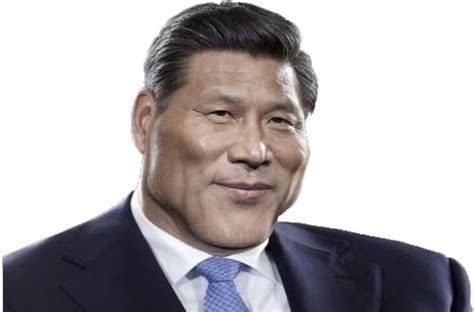
The person in the picture is Yang Heping, a US citizen with a Chinese green card, and he is the most popular orthodox Marxist-Leninist-Maoist self-media figure on the Chinese internet (with 3 million followers on Tiktok and 800,000 on Bilibili). Yang Heping advocates that whether it’s Ukraine, Russia, or Iran, “the truth is on the side of the proletariat, not on the side of any government or capitalist.”
In China, those who unconditionally support Iran and Russia are usually nationalists or national leftists.
I wonder if the differences between the left-wing in Europe and America and the left-wing in China are really that significant?
What does he think about the Odessa Massacre, the attempts at ethnic cleansing of Russian speakers and minorities in Ukraine and the glorification of Ukrainian Nazis? Would these factors constitute a defensive struggle against Russia? If this is considered a defensive struggle then would he apply the same logic to ETIM terrorists in west china?
我在其他回复里已经说过了,他认为乌克兰同样是一个资本主义寡头政府
Would that mean a country must first become socialist before it can engage in warfare in another country to prevent ethnic cleansing otherwise it has engaged in imperialism?
我觉得你根本不想和我有任何交流,你纯粹是来找茬来了,随便你怎么解读
You don’t get to shut down like that. You have made serious allegations so you have to back them up. If you back down at the first chance of breaking down your internal logic then it does not really look like your here to explore marxism here but make your impositions known to us. You can answer these questions, you may find your answers enlighten us.
If you don’t answer these questions then you will give the impression you are trolling here.
Is it not the more challenging questions that help us explore truly further? Is that not the Lacanist consideration?
我觉得你就是在倒打一耙扣帽子。
“Would that mean a country must first become socialist before it can engage in warfare in another country to prevent ethnic cleansing otherwise it has engaged in imperialism?”这种二极管式结论除了你在暗示我和他在支持种族灭绝、美帝国主义之外,我完全想不到任何理由。
我在最初与其他人的回复已经明确提到过了,他对帝国主义的判断是基于当前国家的金融资本、垄断资本比例,对待本国资本主义政府抵抗入侵应该是利用,而不是支持。就像是日本帝国入侵中国时,利用国民党,支持中国共产党一样。
这种二极管式结论除了你在暗示我和他在支持种族灭绝、美帝国主义之外,我完全想不到任何理由。
我在最初与其他人的回复已经明确提到过了,他对帝国主义的判断是基于当前国家的金融资本、垄断资本比例,对待本国资本主义政府抵抗入侵应该是利用,而不是支持。就像是日本帝国入侵中国时,利用国民党,支持中国共产党一样。
Rather than presume you could instead answer the question. You could, for example, explain how a capitalist country could engage in warfare to prevent ethnic cleansing without it being considered imperialism.
“谁主张谁举证”,你不如先回答我这个世界上有多少资本主义国家,是以“阻止种族清洗”为根本目的才主动或参加对外发动战争的。
My fellow Marxist, how does the average Chinese in Mainland that’s politically inclined view what’s happening in the Palestine?
大多数人知道巴以冲突的人都支持巴勒斯坦(包括很多没有政治意识的人),毕竟中国人很少见到这么可怕的人道主义灾难。
有少部分自由右派(自由意志主义者)坚定的支持以色列,你通常在推特、YouTube上中文板块看到的蠢货就属于这类人,这类人在14亿人口里就算“只是100人有一个”,单独拿出来也不算少数。
但是支持巴勒斯坦中的一部分人走向另一个极端,他们真的支持法西斯种族灭绝犹太人,有时候我看与二战犹太人相关的视频时,经常看见相关种族主义评论。
左派里:大多数极左翼同情并理解哈马斯的极端手段和宗教立场,但是更支持“解放巴勒斯坦人民阵线”、“巴勒斯坦解放民主阵线”。 中左派里,改良主义者(自由主义左派)因为其LGBT、女性主义与阶级主义、民族解放等同的立场,一般各打五十大板,更偏向法塔赫,或者淡化不在此事不尝试追踪跟进。 民间“左派建制派”,通常都是哈马斯的坚定支持者。
That doesn’t seem much different than what I see in the US, but most support Zionism and hate Hamas, even if they sympathize with Palestine.
Thank you for taking the time.
What do you mean by “Orthodox Marxist”? Generally in American left circles, the people who adopt that term tend to think that Lenin (or if not him, then certainly Stalin) either misinterpreted Marx or cynically used Marxism to gain power, but if I am not familiar with its usage in China.
In China, those who unconditionally support Iran and Russia are usually nationalists or national leftists.
If by “nationalists” you mean fascists and “national leftists” you mean fascists who adopt superficially left-wing rhetoric to cynically appeal to people, yeah that’s pretty much the same as here in America. What are you seeing that leads you to believe that may not be the case?
In China, “orthodox Marxism” primarily refers to Marxism-Leninism; its core premise is the irreconcilable nature of capitalist production relations, and its ultimate goal is the establishment of a democratic planned economy through either legitimate elections or revolution (though there are fierce internal disagreements among proponents of figures such as Stalin, Mao Zedong, Trotsky, and other Marxist theorists). This distinction is drawn primarily to differentiate it from the center-left—particularly liberals like Habermas who invoke the Marxist banner while essentially abandoning class theory—and from the reformism of the official establishment’s “socialist market economy.”
The reason why I have this doubt is that I stated on the Reddit forum “Late Stage Capitalism” that I opposed the US invasion of Venezuela, but also didn’t like Maduro, and then I was permanently banned
Often in the American media, offering a negative opinion of a target of imperialism will be used by those promoting the imperialism to support their agenda. They will say things like “Everyone dislikes this regime, and we are the only ones brave enough to make the hard choices and sacrifice to get rid of them”. This leads the anti-imperialist movements in the US to say they oppose imperialist interventions and hold any critical analysis of the targets out of public view. Similarly, any intra-left disagreements will be amplified into viciously destructive sectarianism instead of a more productive conversation.
In China, “orthodox Marxism” primarily refers to Marxism-Leninism; its core premise is the irreconcilable nature of capitalist production relations, and its ultimate goal is the establishment of a democratic planned economy through either legitimate elections or revolution (though there are fierce internal disagreements among proponents of figures such as Stalin, Mao Zedong, Trotsky, and other Marxist theorists). This distinction is drawn primarily to differentiate it from the center-left—particularly liberals like Habermas who invoke the Marxist banner while essentially abandoning class theory—and from the reformism of the official establishment’s “socialist market economy.”
The reason why I have this doubt is that I stated on the Reddit forum “Late Stage Capitalism” that I opposed the US invasion of Venezuela, but also didn’t like Maduro, and then I was permanently banned
our evaluation is contingent on their opposition to western hegemony. I’d prefer a russia trying to do communism again or a secular communist iran etc of course but the US is the biggest problem on the world stage so i have no choice but to think substantial opposition to it is good.
in some sense there’s not really a proletarian side to these conflicts, but the west winning would be much much worse.
Chinese adherents of Marxism-Leninism likewise consider opposing U.S. imperialism to be the primary objective; however, they believe that anti-American capitalist regimes should be utilized rather than pledged allegiance to.
That’s… What we believe, for most of us in these spaces.
I swear, I have to constantly remind myself Putin is probably never going to return to socialism. If wishes were horses…
Iran and Russia are currently one of the few forces actively engaging in combatting the west and their hegemony and therefore they get critical support from communists. There will be exacyly 0 people on here who support Putin or the Iranian government apart from critical support for their efforts against the US. Would I rather have a perfect communist state doing all of this? Yes, but it does not exist.
Others are going to give answers founded in theory as applied to the geopolitical situation better than I could. There are also emotional reasons I am inclined favorably toward enemies of the US. I hate it here. I hate here. We are ruled by mad child molesting aristocrats. All institutions were designed by scammers and robber barons to be as exhausting, expensive, and minimally helpful as possible. Most people are bigots of at least one kind. No doubt the same things are wrong in many other places but familiarity breeds contempt and I live here. I can’t help but feel gratified when anyone bloodies uncle Sam’s nose.
I completely understand this reason.
When the sanctions on Iran end, and they’re allowed to participate in the global community like everyone else, then we’ll be fine criticizing them day and night; for now, they’ve been through decades of sanctions that have genuinely killed and hurt people. Here’s Giuliani literally excitedly telling people about how the sanctions on Iran are working and using as evidence people having to sell their organs and that men and women are starving:
https://x.com/MintPressNews/status/1575843136798347265
https://xcancel.com/MintPressNews/status/1575843136798347265
There’s a time and place for criticizing countries, and one that’s currently being starved to death needs support, not criticism. Gaza isn’t communist either, and I’m sure there are nationalists who support Gaza as well, but that doesn’t change the fact that at this time the people of Palestine need help and total support.
As a Marxist, does the fate of the people of Iran mean anything to you? Because as bad as the Iranian government is, in an existential conflict like what they’ve been put through for decades, now is not the time to oppose them. When America conducts attacks on the Iranian people, when they attempt to starve the Iranian people to death, when they do everything in their power to destroy the lives of the Iranian people, who do you think is pushing back against all that and trying to put a stop to it? It’s literally their government; there are no other forces protecting the Iranian people from this horrific imperialist violence.
As I said, when they are allowed to rejoin the global community and participate like everyone else, then we’ll be more than happy to criticize them day and night, but while the lives of the Iranian people is at risk, now is not the time.
As for Russia: they’re opposing Western hegemony, and the world needs a power in opposition to the West’s EXTREMELY active imperialism. Trust the people of the world when they vote that America is the greatest threat to world peace. Russia has a bad government, but they’re not starting wars and civil wars in Africa and the Middle East or murdering African leaders. Over the course of the last twenty years, America has killed literal millions of people around the world and destabilized countries horrifically. Iraq used to be one of the most advanced countries in the Middle East, and after this last war, the UN said Iraq had been reduced to a pre-industrial stage. France has literally tried to murder Traore tens of times.
In fact, virtually all Chinese adherents of Marxism-Leninism agree with your statement that “the primary cause of poverty and hunger among the populations of anti-American regimes is the blockade imposed by NATO, rather than oppression by the regimes themselves.”
However, a fundamental disagreement arises thereafter: Chinese Marxist-Leninists believe that the root cause of everything lies in capitalist relations of production—specifically, the private ownership of the means of production and wage labor. They argue that when a weak capitalist nation breaks through a blockade and gradually evolves into a stage of monopoly capitalism, it will inevitably become the next imperialist power—citing the Empire of Japan as an example. Consequently, they maintain that such regimes should merely be utilized by the Left as instruments, rather than being objects of loyalty.
I believe this stems from the differences in historical memory between China and Western nations; in reality, Western countries never established independent leftist states through revolution.
In Chinese history: The Japanese Empire justified its invasion during World War II by claiming to “oppose British and American colonialism in East Asia,” yet history proved them to be fascists.
Similarly, the Kuomintang under Chiang Kai-shek justified its resistance by citing opposition to “the Japanese Empire’s aggression and colonial rule in China,” even though they, too, proved to be fascists.
You hold the view that “no one but an anti-American regime can defend the Iranian people,” whereas Chinese Marxist-Leninists believe that “the victory of the Communist Party of China demonstrates that the people are capable of defending themselves.”
the victory of the Communist Party of China demonstrates that the people are capable of defending themselves.”
This seems like ignoring material conditions.
(this reads very weirdly, like it was written by AI or something; like a liberal asked an AI to craft something that sounds like what a Chinese Marxist might say in English)
Chinese Marxist-Leninists believe that the root cause of everything lies in capitalist relations of production—specifically, the private ownership of the means of production and wage labor. They argue that when a weak capitalist nation breaks through a blockade and gradually evolves into a stage of monopoly capitalism, it will inevitably become the next imperialist power—citing the Empire of Japan as an example. Consequently, they maintain that such regimes should merely be utilized by the Left as instruments, rather than being objects of loyalty.
If this is truly what they think, they should study other nations that broke away from colonialism and how they turned out; Algeria, Zimbabwe and South Africa didn’t turn into the next imperialist powers, they were simply liberated from their colonialism. Either way, there is no acceptable solution where abandoning the people of suffering nations (the Iranians for example) is the answer. Let them first be liberated and then we can deal with the fallout if there even is one.
You hold the view that “no one but an anti-American regime can defend the Iranian people,” whereas Chinese Marxist-Leninists believe that “the victory of the Communist Party of China demonstrates that the people are capable of defending themselves.”
That’s not what I said; The current Iranian government is the one they have, not the one we’d like but it is the current one, and they’re the holders of the military weapons to rebuff attacks against them, and the ones who have the military that has the training to resist occupation. America literally bombed water plants in Iran; the government was not able to stop that, so how would the people stop it? Genuinely what a very bizarre response; what are the people supposed to do when faced with one of the most powerful governments in the world going to war with them? Especially when both Israel and America admitted they have mossad traitors embedded in Iran and giving weapons to create armed groups in Iran, intending to try and fracture the country.
Libya had a socialist government that was also decentralized, but their decentralization wasn’t developed enough to do anything about being attacked by America back in 2011; the people had tons of power in Libya, but the US government is way too skilled at destabilizing and destroying countries for the people to win that battle.
Are you a liberal who’s been sticking prompts into AI? This response reeks of liberal thinking, with very unnatural dogmatic sentences tossed in.
我现在觉得和你们交流根本是浪费时间,今天热的要死,我还要不断的用AI翻译翻译我的语言来照顾你们的语言障碍,这完全没有意义,你觉得是什么就是什么吧
The translation isn’t the problem (besides which I can just translate everything you say via google’s translate function), it’s the dogmatic responses that ignore the real world situation and which reads like the thinking of liberals.
你爱怎么想就怎么想吧,你觉得我是自由主义者,那你说的对,我不在乎,如果这个网站觉得我是自由主义者要把我封禁,那就封禁吧
This site, ban you for being a liberal? HA! If we did that this place would be a ghost town. Were all liberals down here comrade. (I’m making a joke, you’ll be fine).
Right now, I feel like communicating with you is a waste of time. It’s unbearably hot today, and I have to keep using AI to translate my language to accommodate your language barriers. That’s completely meaningless. Whatever you think is what you are
🤨
因为我是用AI翻译的,我英语不好,如果你支持我用中文,你来翻译,那我非常赞同
From what i’ve observed the answer falls into a couple of camps, 1. ML’s usually tend to back Russia and Iran due to their opposition to western hegemony even if they accept that they aren’t progressive due to a general understanding that the no.1 enemy of socialism in the modern era is american imperialism and thus their fight against it is beneficial in the long term, even if they preffer that they were socialists
-
The second camp is the nationalist communist types, for example the ACP, they generally tend to view russia and iran positively precisely because they are socially regressive
-
The general idea of “the truth is on the side of the proletariat, not on the side of any government or capitalist.” while accepted as correct, it’s viewed negatively due to a tendecy of certain western marxist schools to call for revolutions in already socialist states like Cuba or China and their tendency to infiltrate and sabotage parties that support the existing socialist countries and anti-imperialist struggles against the US and its lapdogs.
It also doesn’t help that these schools of thought were actively financed and guided by the CIA to undermine the various socialist movement in the west, so the support of anti-imperialism even if done by coincidence like in the case of russia and iran became a way to see if someone is actually comitted as a serious socialist and not a government spook
-
I have a very hard time understanding the post actually.
“the truth is on the side of the proletariat, not on the side of any government or capitalist.”
What is the meaning of this statement in this context? It doesn’t give any answers and lacks substance.
If the US succeeds in subduing Iran and the EU/NATO succeeds in weakening Russia to the point of fragmentation, then China is left as the only major obstacle to Western hegemony. In such a world, the US would be more aggressive in the Pacific, sanctions and blockades would become easier to enforce, the Belt and Road Initiative would face greater pressure, Cuba and other sanctioned states would become more isolated, and anti-colonial governments in places like the Sahel would lose important sources of external support. This would be bad for the proletariat. Generally a strong Russia and a strong Iran is essential for increased multipolarity and a stronger development of the material conditions of the working class.
This support is not unconditional but critical.
Russia and Iran as weak links in imperialism secondary imperialisms (Iran, Russia).
Meaning what? That they are themselves imperialist, not just to the degree of western states? From a ML standpoint this is laughable, what is the definition of imperialism then? It is not the usual Leninist one that’s for sure.
“the truth is on the side of the proletariat, not on the side of any government or capitalist.”This is just a brief summary of his theory. If you want to hear more, I can convey his arguments, but to be honest, I don’t think you want any communication with me at all. You said, “This is not Leninism,” but you didn’t provide any arguments either.
- The economic essence of imperialism is monopoly capitalism
Lenin’s theory: Lenin pointed out that the fundamental economic characteristic and essence of imperialism is the “replacement of free competition by monopoly.” To ensure the “survival” and continued growth of domestic capital, monopoly capital groups are compelled to export capital globally and seize resources and markets.
Yang Heping’s arguments:
The Russia-Ukraine War: He argues that Russia not only harbors territorial ambitions reminiscent of the Tsarist era, but its regime is also essentially controlled by a monopoly-oligarchic capitalist class that emerged following the “restoration of capitalism.” Russia’s invasion of Ukraine was not merely an act of geopolitical security defense; rather, it was an act of aggressive expansion driven by its domestic monopoly capital seeking to advance its own interests and carve up spheres of influence.
US-Iran/US-Russia conflicts: As the world’s most powerful “super-monopoly” imperialist state, the US wages wars (such as the Iraq War) to consolidate the hegemony of the US dollar and secure control over core resources like oil.
Any other late-developing nation that embarks on the path of capitalism and develops monopoly capital will inevitably follow the same path of striving for global dominance.
- The Law of Uneven Political and Economic Development in Capitalism
Lenin’s Theory: Lenin posited that “uneven development is an absolute law of capitalism.” Established imperial powers decline while emerging ones rise, leading to shifts in the balance of power.
Yang Heping’s Argument: He applies this theory to explain the imperial rivalries between the US and Russia, and between the US and China. He points out that the US is not the world’s sole imperialist power; the essence of the Russia-Ukraine war lies in a struggle to re-divide spheres of influence between an “established hegemon” (US imperialism) and a “rising imperial power” (Russia).
As long as capitalism exists, the ultimate “fundamental solution” to the conflicts between interest groups driven by uneven development is war.
- Lenin’s Assessment of the Nature of “Imperialist War”
Leninist Theory: During World War I, Lenin distinguished between “unjust imperialist wars of plunder” and “just wars of national liberation.” He argued that determining the nature of a war depends not on which side fired the first shot (a matter of diplomatic history), but on the class character of the ruling classes of the belligerent nations.
Yang Heping’s Argument: Yang Heping uses this framework to sharply criticize the nationalist double standards held by the “pro-Russia” faction within the country. He emphasizes that the ruling classes on both sides of the Russia-Ukraine conflict are bourgeois; consequently, for Russia, this is an unjust, predatory imperialist war of aggression, whereas for the Ukrainian people, it is a struggle against aggression. One must absolutely not rationalize Russia’s act of aggression as a “just anti-imperialist” action simply out of opposition to US imperialism.
- Thorough Critique of “Social Pacifism” and the “Theory of Ultra-imperialism”
Lenin’s Theory: Lenin sharply criticized Kautsky’s “theory of ultra-imperialism” (the notion that imperialism could peacefully divide the world through negotiation rather than war) as well as “social pacifism,” which obscured underlying contradictions.
Yang Heping’s Argument: Yang Heping argues that, in an era when imperialist powers are locked in chaotic conflict and vying for hegemony, it is extremely naive to imagine that these nations could sit down and achieve genuine peace. He invokes this Leninist theory to urge the Left not to pin its hopes on compromises between major imperialist powers; instead, the proletariat must recognize the reactionary nature of the bourgeoisie on both sides of the conflict, rather than maintaining a so-called “neutrality” between the aggressor and the victim of aggression.
- Distinguishing between “Traditional Friction” and “Modern Imperialist Expansion”
Lenin’s Theory: Imperialism, as the highest stage of capitalism, possesses unique economic dynamics that distinguish it from the aggression associated with slavery, feudalism, or early capitalism.
Yang Heping’s Argument: He illustrates this distinction through comparison. He argues that historical conflicts—such as the “India-Pakistan conflict” or the “Iran-Iraq War” of the 1980s—while involving warfare and plunder, were essentially traditional struggles for power and spoils among exploiting classes; they did not constitute the modern imperialist behavior of monopoly capital, which operates on the principle of “expand or perish.”
In contrast, conflicts such as those between the US and Iran or Russia and Ukraine are irreconcilable struggles for spheres of influence driven entirely by modern monopoly capital.
Yang Heping’s line of reasoning could even be described as dogmatic, as it remains consistently grounded in Lenin’s original texts; your arguments, by contrast, are almost entirely based on geopolitics. I do not believe you can effectively refute him from the perspective of Lenin’s own writings. Lenin’s objective was always to destroy all the capitalist nations involved in World War I—including his own homeland, Tsarist Russia—rather than to pursue “multipolarity” or “improvements in the working class’s living conditions”; his aim was to “launch an international revolution and immediately establish a proletarian regime.”
You miss understand imperialism. Imperialism is not simply whenever a war is not about national liberation. Imperialism according to Lenin is about the need to export capital. Russia exports mostly goods and resources. The world Bank lists Russia as developing nation. Foreign direct investment outflows out of Russia are negative. Russia is not imperialist. The capitalist class in Russia would make better profits without the war, even if they had lost the Ukrainian sphere of influence. The reason Russian capitalists need this war it to defend assets inside Russia from NATO imperialists. In repeated negotiations to prevent the war, NATO did not accept yes as an answer from Russia to their demands.
On the other hand, US capital would not survive without the forever wars. US absolutely needed this war, that’s why they started it. Remember, Putin wanted Russia to join NATO and become subservient under US, they didn’t accept, because of the absolute imperative to have war.
As I understand it, Lenin’s definition of imperialism was not based on a capital surplus, but rather on the proportion of monopoly capital or finance capital within a country. If one looks at the balance of capital inflows, Tsarist Russia—long a net importer of capital from Britain and France—certainly would not qualify as an imperialist power; yet, aside from Lenin, you would be hard-pressed to find anyone else in the world who was more intent on destroying Tsarist Russia.
but to be honest, I don’t think you want any communication with me at all. You said, “This is not Leninism,” but you didn’t provide any arguments either.
I apologize if I sounded condescending, I now understand Yang Heping’s (YH) position. Contrary to your post, I think this is a very common one, especially among non-ML leftists organizations in the west. It seems that YH’s primary concern is guarding against class collaborationism. From what you wrote it seems he applies Lenin’s stance during WW1, not supporing bourgeoisie inter-imperialist conflicts, to prevent the Left from becoming cheerleaders for reactionary capitalist governments. This is a principle concern and obviously our ultimate goal is the emancipation of the proletariat and not the success of any bourgeois state.
However, applying Lenin’s 1914 framework to the 2020s without accounting for the shifted material conditions is (as you wrote) dogmatism, not dialectal materialism. Being “consistently grounded in Lenin’s original texts” is not really a thing in 2026 unless you are also analyzing imperalism in the context of WW1.
Regarding the summary YH’s theory:
“The truth is on the side of the proletariat, not on the side of any government or capitalist.”
While this sounds revolutionary, it lacks material substance. Dialectal materialism does not consider “truth” is not an abstract moral category; it is found in the concrete analysis of concrete conditions. It borders on Trotskyist sloganeering because it offers no actionable roadmap for the working class. The proletariat does not exist in a vacuum bot in a world currently dominated by a unipolar US hegemony. If a bourgeois government takes actions that objectively weaken that hegemony, thereby easing the boot off the neck of the global proletariat, recognizing and tactically supporting that fracture is not a betrayal of the working class.
Arguing that because Russia is imperialist because it has domestic monopoly capitalism fundamentally misunderstands Lenin’s economic criteria. Lenin didn’t say “imperialism is monopolies doing bad things”. Imperialism is a specific stage of global financial domination cahracterized fundamentally by the export of capital and the super-exploitation of the periphery to generate super-profits.
The US and NATO export financial capital, control global institutions (IMF, World Bank, etc) and violently enforce the dominance of the dollar, extracting super-profits globally. Russia on the other hand, primarily exports commodities (oil, gas, agricultural products) and weapons. Foreign direct investments (FDI) outflows from Russia are in most sectors negative (and otherwise negligible). The Russian bourgeoisie is heavily sanctioned and isolated from global finance. Iran is literally subjected to starvation-level blockade and cannot even trade its own oil freely, let alone export finance capital to subjugate other nations.
To say that Russia and Iran are imperialist because they have an internal bourgeoisie with capitalist ambitions is like saying the corner store outside my apartment is a multinational corporation because it also wants to make a profit.
Lenin’s assessment of WW1 as an “unjust imperialist war of plunder” between relatively equal imperial powers dividing the world was true then – today’s material conditions are completely different. We don’t have competing empires of equal standing, but a single global hegemon (US/NATO) attempting to crush regional bourgeois states that refuse to act as subserviennt compradors.
When NATO pushes into Ukraine, it is expanding the US imperial monopoly. When Russia pushes back it is a national bourgeoisie fighting for its own survival against that monopoly. The Russian capitalists would have happily integrated into the West (as they tried in the early 2000s), but US finance capital demands absolute submission and not partnership. Acknowledging Russia’s resistance is not “Social Pacifism” obscuring contradictions but recognizing the primary contradiction in the first place.
Imperial Japan in the 1930s was already heavily industrialized, actively exporting capital and colonizing Korea and China for super-exploitation. Iran and Russia are not in that position. If, in 50 years, a multipolar world exists and Russia attempts to establish a gloval financial monopoly, the primary contradiction will have changed, and our analysis will change with it.
But right now the primary barrier to socialist development worldwide is the US empire.
In another reply you had a comparison about Imperial Japan and noted the risk that a nation breaking through a blockade will inevitably become the next imperialist power. You also mentioned that these regimes should be used merely as “instruments, rather than being objects of loyalty.”
But here we are in agreement, we do not pledge loyalty to the Islamic Republic or the Russian Federation. We don’t pretend Putin or the Ayatollahs are socialist. We offer critical support, which means exactly what you said. So maybe I have not understood your position well enough after all.
I think it boils down to two things which are a bit confusing:
Russia and Iran as weak links in imperialism secondary imperialisms (Iran, Russia).
This doesn’t hold up to a Leninist definition of imperialism. Which makes the whole discussion of dogmatism even more unclear.
unconditionally support Iran and Russia are usually nationalists or national leftists.
This is generally not a thing in the West, which makes the question of the original post ill-stated. You’d especially not find an ML unconditionally supporting these states.
I wonder if the differences between the left-wing in Europe and America and the left-wing in China are really that significant?
I have discussed things of this nature with Chinese MLs and have generally had few disagreements. I would say that among contemporary MLs, there is quite the consensus regarding the primary global contradictions for some time now.
对不起,我说话可能语气有些重了,我基本理解你的想法了
I encourage the discussion but I think if we are to arrive at to any fruitful conclusions you must clarify a few premises beforehand, otherwise it will be hard to understand what the different positions are in the first place.
The difference can also come down to the country we’re in. Marxists in China will have a different calculus open to them than Marxists in the United States. For us on the U.S., we tend to embrace revolutionary defeatism as any nation which resists our empire’s aggression is worth supporting even though they’re likely incredibly imperfect. For USians any nation which opposes our imperialist projects represents a progressive force towards dismantling our empire
I can fully understand this; after all, “in a reactionary war, the revolutionary class can only wish for the defeat of its own government. This is not merely an axiom, but a principle that only the lackeys of the bourgeoisie or spineless social-chauvinists would deny.”
Yay I won
nobody here uncoditionally support russia and iran in everything they do
supporting one state does not mean the same thing for different individuals. right wingers are against israel because they perceive israel as taking their tax money and healthcare and want to be america first while left wingers are against israel because of the apartheid and genocide. some people support russia because they see it as a white supremacist ultra christian state (not true) while other people support russia as a force against western hegemony. some people support china because they perceive a harsh, ultra disciplined, monoethnic state while others support china because they see it as an example of a successful socialist country. someone from china not supporting russia, iran, north korea etc. will have a vastly different motivation and perspective than (the average) western person not supporting those states.
i wouldnt say its a chinese left wing vs american left wing thing either because were looking at orthodox marxist leninist maoist opinions here and many leftists would shiver being at being called marxinist leninist.
yang heping also has an unique perspective because he was born in 1952 to parents who moved to maoist china to help with the revolution and has seen an ideological/historical world we didnt get to see
I fully agree with your point; my earlier argument indeed failed to adequately distinguish between “the Left” and “Marxism.”
At least in my part of Europe, the position you describe is also the position of most leftist and communist organisations. Whether that’s because open support for Russia or Iran is a sure way to put a target on your back for intelligence agencies and possible criminalisation, or if it’s because it’s actually the majority position is unclear to me.
It is becoming more common for people to openly support Iran in their fight against US imperialism, but support for Russia remains very controversial. Most orgs will say that working class people suffer from war, and that all sides should seek for diplomacy above everything else. That’s also the largest argument against increased military spending. But it’s not a very convincing argument to the masses who believe that Ukraine deserves our material support (at least where I live).
Only recently has local leftist media started reporting on the Ukrainian neonazi movement and how it’s selling off all its capital to Western investors, I think because they realise that support for Ukraine in the West needs to fall before people are willing to get behind an anti militarisation platform.
The Capitalists had been well prepared in advance, they were pushing and pushing, surrounding Russia with missles, ETC, such that it was only a matter of time before Russia would need to act to protect itself, since the populace of Capitalist countries had been successfully kept completely in the dark about that building situation, they were well prepared to paint Russia’s actions as out of nowhere, sudden and vile “those evil evil Russians”, they showed manufactured atrocity propaganda and went into overdrive with, stuff like, taking things that the azov/keiv regime did to donbas or simular, and passing it off as stuff Russia did to the ukraine for example.
On top of that, the more emotionally supported a belief is, the more painful it is to acknowledge that it is wrong, since the atrocity propaganda had so traumatized liberals, and since they got so drawn into emotionally supporting what turns out to be a fascist state color revolutioned in by the US, facing just how badly they were made the fool, and their emotions played like a fiddle, for many liberals, facing that is brutal, so they go into denial instead, it is one reason why they may support the Palestinians, but condemn Russia.
We critically support nationalist movements that undermine imperialism and neocolonialism, and in that respect both Iran and Russia play a progressive role in opposing imperialism. We do not support their economic systems, and desire socialism in these countries, which would be preferable to their current status. We do not consider Russia or Iran to themselves be imperialist.
I also support those nationalist movements aimed at undermining imperialism and neocolonialism.
However, as far as I understand, the majority of the Chinese Left holds a rather pessimistic view regarding whether these countries will evolve into genuine socialist regimes; the global Left is still living in the shadow of the massive, lingering trauma left by the failures of the 20th century.
It wasn’t long ago that I was reading news out of China about popular support in China for Iran’s fight against US Imperialism, they (people, not the state) were trying to send financial aid to help the Iranian’s against the US that has been bombing them, 1.4 Billion people is a lot of people, there are going to be liberals, there are going to be all kinds of socialists full of all kinds of errors, making all kinds of mistakes, that does not however mean they are a majority. Also important, it is not a popularity contest, something is not true or not based on popularity, unless that something is “is this thing popular?”, that applies to the non-imperialist status of Iran and Russia, even if there are wrong ideas out there that say otherwise, as also that is applies to the Science of Socialism, which is not determined by popularity on whether or not it is true, unless the question itself is of if this thing is popular.
Edit: Seems Cowbee is probably right with it being a translation issue, as “the truth is on the side of the proletariat, not on the side of any government or capitalist.” doesn’t seems to go against what we are saying, or the concept of critical support.
“the truth is on the side of the proletariat, not on the side of any government or capitalist.”
我没看懂你在说什么
I ran this through google translate and got “I’m looking forward to seeing you there”, but I don’t understand what that means in the context of my comment that this is a reply too, is maybe google translate a bad option for translation? I’m not sure what a better translator is and I’m open to a better one if I can get a link for it.
我用谷歌翻译试了一下,结果显示是“我很期待在那里见到你”,但我不太明白这句话放在我原本那条评论的语境下是什么意思——难道谷歌翻译不太好用吗?我也不清楚哪个翻译工具更好,如果能提供链接的话,我很乐意尝试一下更好的工具。
What I actually said was “I didn’t understand what you were saying,” but somehow Google managed to translate it as “I’m looking forward to seeing you there.” I used to rely heavily on AI tools (Baidu AI, Google Translate, Gemini, DeepL, and DeepSeek) to translate and polish my words. Usually, I’d have one software translate my Chinese into English, and then use another to translate it back to check for errors. However, some people started claiming that I don’t sound human, or that I sound like a liberal trying to use AI to pass off as Chinese. It made me feel like I was just being overly affectionate and wasting my time trying to please a group of people who look down on me anyway. So now, I only write in casual, colloquial Chinese—even if machine translation might struggle to understand it. (The paragraph above was translated by AI).
我说的是“我没看懂你在说什么”(I didn’t understand what you were saying.),不知道谷歌怎么做到翻译为"I’m looking forward to seeing you there"。我之前一直在用AI翻译润色(百度AI、谷歌翻译、gemini、deepl、deepseek),通常一个软件翻译汉语为英文之后,再用另一个软件翻译回中文看看是否无误,但是有介于某些人认为我说话没人味、我像自由派用AI装中国人,我觉得我在自作多情、浪费时间讨好一群人根本看不起我的人,我现在只用中文的口语化表达,机翻可能无法理解(以上这段话是AI翻译)
What I actually said was “I didn’t understand what you were saying,” but somehow Google managed to translate it as “I’m looking forward to seeing you there.” I used to rely heavily on AI tools (Baidu AI, Google Translate, Gemini, DeepL, and DeepSeek) to translate and polish my words. Usually, I’d have one software translate my Chinese into English, and then use another to translate it back to check for errors. However, some people started claiming that I don’t sound human, or that I sound like a liberal trying to use AI to pass off as Chinese. It made me feel like I was just being overly affectionate and wasting my time trying to please a group of people who look down on me anyway. So now, I only write in casual, colloquial Chinese—even if machine translation might struggle to understand it. (The paragraph above was translated by AI).
我说的是“我没看懂你在说什么”(I didn’t understand what you were saying.),不知道谷歌怎么做到翻译为"I’m looking forward to seeing you there"。我之前一直在用AI翻译润色(百度AI、谷歌翻译、gemini、deepl、deepseek),通常一个软件翻译汉语为英文之后,再用另一个软件翻译回中文看看是否无误,但是有介于某些人认为我说话没人味、我像自由派用AI装中国人,我觉得我在自作多情、浪费时间讨好一群人根本看不起我的人,我现在只用中文的口语化表达,机翻可能无法理解(以上这段话是AI翻译)
We don’t generally believe these countries will reform their way to socialism. Revolutionary means by which socialism is established will still likely be required, even in a state like Russia where the KPRF occupies seats in the Duma.
I believe the easiest way to connect your perspective with ours is in tying your stated concept of “support for utility” with the English term “critical support.” The “critical” refers to, essentially, the fact that we do not support their actual systems in the long term, merely their actions in relation to imperialism and neocolonialism. This is a strategic form of support.
With respect to “Actually Existing Socialism,” such as the PRC, DPRK, Vietnam, Laos, former USSR, and Cuba, we simply state that we support them. This does not mean we believe any of these are perfect and don’t critique them, but instead that support is more broad, general, and aligned with the actual mode of production and distribution.
呃。。。。。。第二段我看不懂,显然是某些术语我用机翻翻译不出来了
I apologize, comrade. I will try to speak in a way that is easier and simpler to translate. The purpose of my second paragraph was to identify the source of confusion. It is my belief that the source of confusion is language differences. I will make this statement simple for easier machine translation.
We support Russia and Iran only with respect to their anti imperialism. We do not support Russia and Iran’s economy. We support socialism, which we believe will likely require revolution even in Russia and Iran. Support is conditional and selective.
I hope that better conveys my meaning!
❤️
好的,👌,我完全理解了
Glad to help!
We don’t look at the Russian Federation and imagine the Soviet Union, nor does nobody think Putin is building socialism. The support is a strategic judgment about the global balance of forces, rooted in a materialist reading of where the primary contradiction lies rather than having anything to do with Russia’s internal character.
The primary contradiction in the world is a bloc conflict between Western imperialist states, led by the United States, and the Global South. Western imperialism is the system that enforces economic extraction through debt, sanctions, military bases, trade rules, enabled by dollar’s reserve status. It’s the force that has strangled development in the Global South and consistently prevented any alternative path of development from gaining traction. As long as that system remains unchallenged there can be no space for experiments in socialism or even genuinely sovereign capitalist development that could later be transformed. That makes breaking Western hegemony a prerequisite for any meaningful change going forward.
Russia currently acts as the main military force directly challenging American led unipolar order. While it’s not doing it for communist reasons, their push against NATO expansion and efforts to build alternative financial and trade architectures with BRICS are objectively opening fractures in Western dominance. Russia bogs down NATO in Ukraine and exposes the limits of Western power which, in turn, weakens the imperialist camp creating room for left movements to grow around the world.
So when we say we critically support Russia, we are not endorsing Russia’s internal political system, its capitalist class, nationalist ideology, or its treatment of workers and leftists inside its borders. Our support is conditional and tactical, extending only as far as Russia acts as a counter hegemonic force. The moment Russia pivots toward trying to carve up the world with Western powers or becomes a new oppressor of weaker nations in a way that simply replaces current imperialist hierarchy, that support goes away. Communists are internationalists who see the current moment as one where the central task as weakening the main enemy.
I’ll use a historical parallel to help make this all more concrete. Communists critically supported the Allied powers against nazi Germany during the second world war even though the Allies were capitalist imperialists themselves, and just as is the case with Russia today, no one mistook Churchill or Roosevelt for being socialists. The point was that fascism represented the most aggressive and immediate threat to the working class and to the possibility of socialist advance. Today, that threat happens to be Western imperialism with its endless hot wars along with economic warfare against the rest of the world. And the scope of critical support is about actively disrupting Western imperialism.
We live in a world where the US and its vassals can dictate terms to everyone else, and breaking Western hegemony leads to one with more possibilities for mass movements and resource sovereignty creating more room for socialist organizing. Russia’s resistance helps crack that door open, and that’s why it makes sense to make tactical alignment on one particular axis of struggle while maintaining full independence on all others which is what giving critical support is.
Similarly, Iran is acting as a primary anti-imperialist force in West Asia. Its internal character is not communist, but it has sovereignty which is a prerequisite for any genuine improvement in the conditions. Ultimately, it’s for the people living in the country to decide how to move forward. Socialism cannot be imposed externally, and it must emerge from within each country according to its own historical and material conditions.
OK,我完全理解你的说法