
Im 61, i decided another I nor the planet could afford kids 40 years aho and had a vasectomy.
over those 40 years endless articles about people not producing more grist for the mill
A nice goal would be a planet with 100 million at most
Another person I knew didn’t want to have children because of the environmental impact. My theory is if all environmentally conscious people stop having children… Who is left to instill those values in the younger generation.
Your theory hinges on the premise that the only adults children can learn anything from are their biological parents, which is completely false.
No, it hinges on the fact that early life development is pivitol in developing children’s morals/values, sense of community etc.
Well the last time the global population was around 100 million was over 2000 years ago, so I think that asking for a 99% reduction in human life is screaming eco-fascist
A planet with 100 million at fucking most? Are you stupid or something?
If you don’t want kids, and you have a vasectomy, that would mean you’re fucking smart.
You’ll need to outline your objections more clearly.
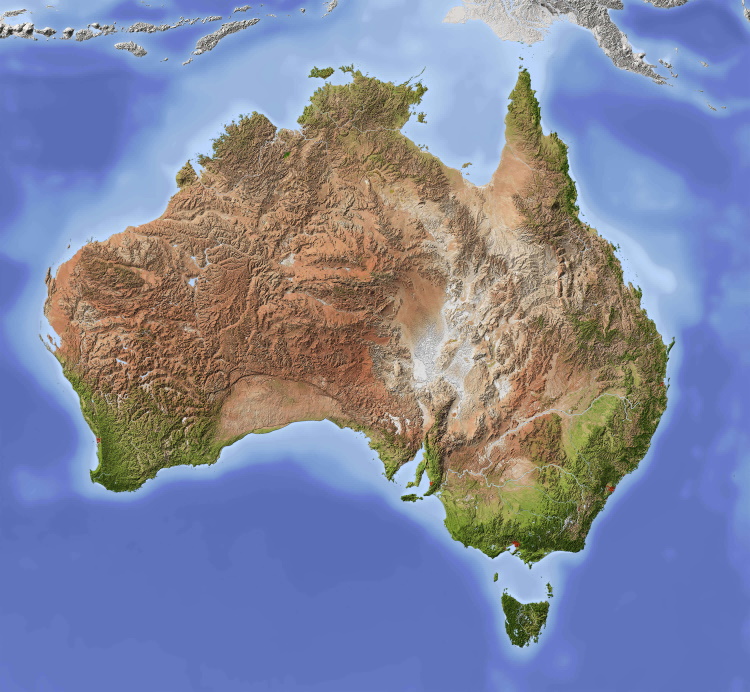
This is a sad situation for Australia on many accounts. It would help if more employment was made available in regional areas where there is still space and prices for housing are relatively affordable.
This is not just Australia. This is repeated across every single developed economy. The problem is capitalism. This is the expected result when every aspect of life is aggressively commoditised. When our political class collude with corporations to extract value from the people, rather than improve their quality of life and standard of living.
I don’t entirely agree with this sentiment, personally. Regional areas by definition do not have large populations. There is be work to be done in the regions, and regional employment can and should be increased, but building more infrastructure to accommodate more people would be very expensive per person.
The real solution in my mind is more homes closer to existing services.
We are pretty allergic to densification in Australia, but we desperately need it. Seems to work fantastically for many European cities.
The car has lead to ridiculous urban sprawl in all major Australian cities, and we need to densify so public transport becomes more affordable to expand.
That and ending housing being an investment vehicle.
I agree with what you say but still maintain that regional areas can and should be developed intelligently. Having enormous built-up cities can be seen as a positive but also has major downsides in the case of war, major facility breakdown, or stoppage of supply (as could happen if transport breaks down due to lack of fuel). That would be a lot of people close together in a state of crisis. We can only hope that doesn’t come to pass.
Yeah fair enough, you make good points. I only resist calls that we should de-urbanise. Though re-reading your comments, you weren’t saying that
Oh yeah cant you wait a few years for the housing market to go back to down?
Its been 6 years since covid when will it go back? Women cant have kids like men. There is an upper age limit eventually. Its like being punished for being responsible. Really makes me want to :: blocked by lemmy ::
It’s men, too. Sperm count and more importantly quality deteriorates. So both sexes are on the biological clock.
I dk if i can see it as comparable. The lower chance for men is still way better than 0 chance for women. I know a few blokes who had kids in 60s but 0 women in that age would be able to naturally.
You made me curious because I know of some outlier cases where post-menopausal women have had natural pregnancies.
On 20 August 1997, Dawn Brooke (UK) became the oldest natural mother when she gave birth to a son by Caesarian section at the age of 59 years. She conceived accidentally, having managed to ovulate past her last period.
https://www.guinnessworldrecords.com/world-records/oldest-mother-to-conceive-naturally-
Never heard of post-menopause pregnancy. Feels like body said we not done yet lol.
Not quite the same thing, but my mom had my older siblings when she was between 15 and 21 years old. The delivery she had at 21 was complicated and traumatic. Doctors told her she’d never be able to have another child. 17 years later, she goes to the doctor and they find me in her belly. Life damn sure finds a way.
Damn, you were one determined little blastocyst. Well done.
Not comparable in any way. 80 year old men can get women pregnant. Women generally have extreme trouble getting pregnant at half that age.
In any way? That’s a gross exaggeration & oversimplifies the myriad of reasons Women have difficulty becoming pregnant. My point was simply that everyone is on the clock.
It’s now a seemingly common trend in developed nations. Old people voted against social programs nationally and vetoed housing development locally then wonder why the children they voted out of existence aren’t around.
We’re not worried.
Capitalism prefers to outsource the child rearing to developing nations.
It welcomes immigration for young adults who are ready to be wage slave / tax payers.
Wow.
“I can see clearly now the rain has gone” 🎶
I don’t want children because in my 30 years on this planet I have watched helplessly as the foundations for fundamentally supporting life on Earth have been dismantled in the name of profit.
Pretty much. On our current trajectory, the quality of life for future generations will be significantly reduced and will only continue to worsen. It has never made sense to me to bring children into such a world.
“Can’t afford” is a loaded phrase. I think it depends on one’s life gaols. IE A high standard of living or a lower standard of living, but high quality of life.
I just looked it up. In Australia it costs between $300,000 to $450,00 to rear a child to age 18. The assumption is that a couple will both work, producing an AFTER TAX income of about $130,000 PA.
We have been conned. Somewhere along the line we came to believe that a high standard of living equals a high quality of life. Good little consumers buy lots of “stuff”
BUT yes, there is certainly a housing bubble in Australia, making our houses among the most expensive in the world. Today, the median house price in Adelaide is between 900-$1 million.==== I live in a so-called dormitory suburb. Today my modest, 120 square metre house has a council valuation of $700,000.
Today, cheap houses can still be bought. That’s fine, as long as you don’t mind living from 150 km [and more] from the City.
I have no answers. I’m 78 years old. I can’t tell if things are distorted through the lens of advanced age, or things really are as bad as they seem for young adults just starting out in life.
Things really are that bad. Try finding a job 150km from the city.