If we want to see less public drug use and people sheltering on transit, we must begin by reopening and expanding supervised consumption sites and by addressing housing unaffordability.
By Diana Chan McNally Contributor
Diana Chan McNally is a Maytree Fellow who works with homeless people in Toronto.
It’s been almost one year since Premier Doug Ford mandated that supervised consumption sites — including four in Toronto — shut down. Since then, the premier has closed a fifth site and quietly shut down overdose prevention sites embedded in shelters.
Having worked in harm reduction for over a decade, what’s happening now is exactly what I expected. Just two months after sites were shut down, drop-in centres across Toronto reported a 288 per cent increase in overdoses. Library workers are also seeing more overdoses. So are transit workers.
In Toronto, while TTC safety is improving, the perception is that the TTC is unsafe — with a major focus being on drug use.
ARTICLE CONTINUES BELOW
Last year, Ford passed Bill 6, which targets homeless people — specifically encampment residents — by making public drug use illegal. Bill 6 conflates public drug use and homelessness as the same issue, punishable with up to six months of jail time, a $10,000 fine, or both.
Someone doesn’t have to be actively using drugs to be subject to this law; a police officer only needs to believe that they might possess or be using drugs to target them. No burden of proof needed.
To be clear, what Ford is proposing isn’t to make drug use illegal on the TTC or any other transit system — it’s already illegal. What he’s proposing is to expand Bill 6’s powers to transit constables to target people believed to be using drugs on public transit — with emphasis on “believe.”
Importantly, transit constables are not police officers. However, Ford wants to give them the powers of police to request ID and order people to leave transit property, as well as the power to detain, charge, or arrest anyone who refuses to comply. Transit constables would also be given the power to seize and destroy personal belongings that they believe contain drugs.
These are considerable powers. Even the Toronto Police Association has opposed them. They also raise the question: what does someone who uses drugs look like?
In its original intention, Bill 6 ties drug use to encampments, making the target demographic abundantly clear: unsheltered people. Although this is still the intention, the target becomes murkier when transposed from a homeless encampment to a public system like the TTC.
ARTICLE CONTINUES BELOW
What Ford is doing — intentionally or not — is opening up all transit riders to profiling and enforcement if they look like “drug users,” which could significantly worsen safety for many Torontonians.
For communities that are already at risk of profiling, there’s a heightened potential for discrimination on public transit — an issue that already disproportionately impacts Black and Indigenous riders.
Moreover, there are no safeguards to prevent or address discrimination in Ford’s proposed regulations. If anything, they’re a green light for transit constables to engage in unjustified profiling and enforcement with less oversight and accountability than police.
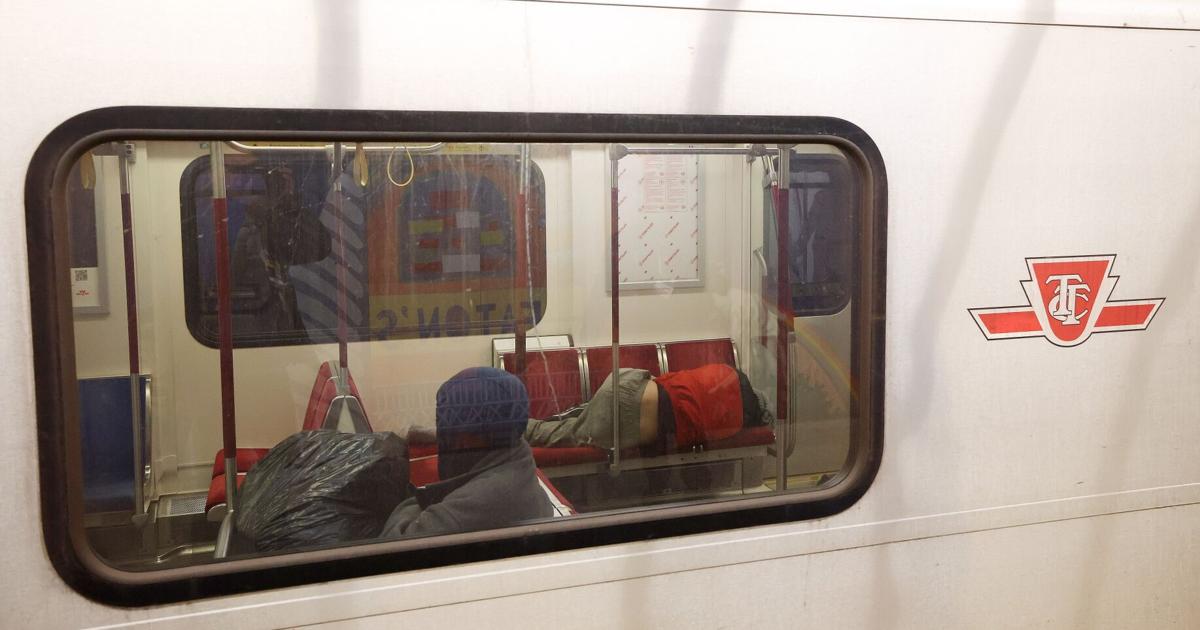
For people sheltering on transit, removing them doesn’t address the fact that they don’t have housing, or that the drug supply remains incredibly toxic. Instead, it limits a shortening list of spaces they are allowed to exist while offering them no alternatives.
Currently, the City of Toronto deploys outreach and case management support to people who are unsheltered or in crisis on the TTC; this is the correct approach, but Ford’s proposal undermines it.
People have a right to be safe on transit. At the same time, everyone has a right to use transit — including people who use drugs and are homeless people.
ARTICLE CONTINUES BELOW
If we want to see less public drug use and people sheltering on transit, we must begin by reopening and expanding supervised consumption sites and by addressing housing unaffordability.
Increasing surveillance and extending police powers doesn’t solve these issues — it merely opens up the broader public to arbitrary punishment, including the potential for jail time and $10,000 fines.
As always, things have to get worse before action is taken that addresses the material conditions leading to these problems, with people suffering and dying in the process.


As always, things have to get worse before action is taken that addresses the material conditions leading to these problems, with people suffering and dying in the process.