
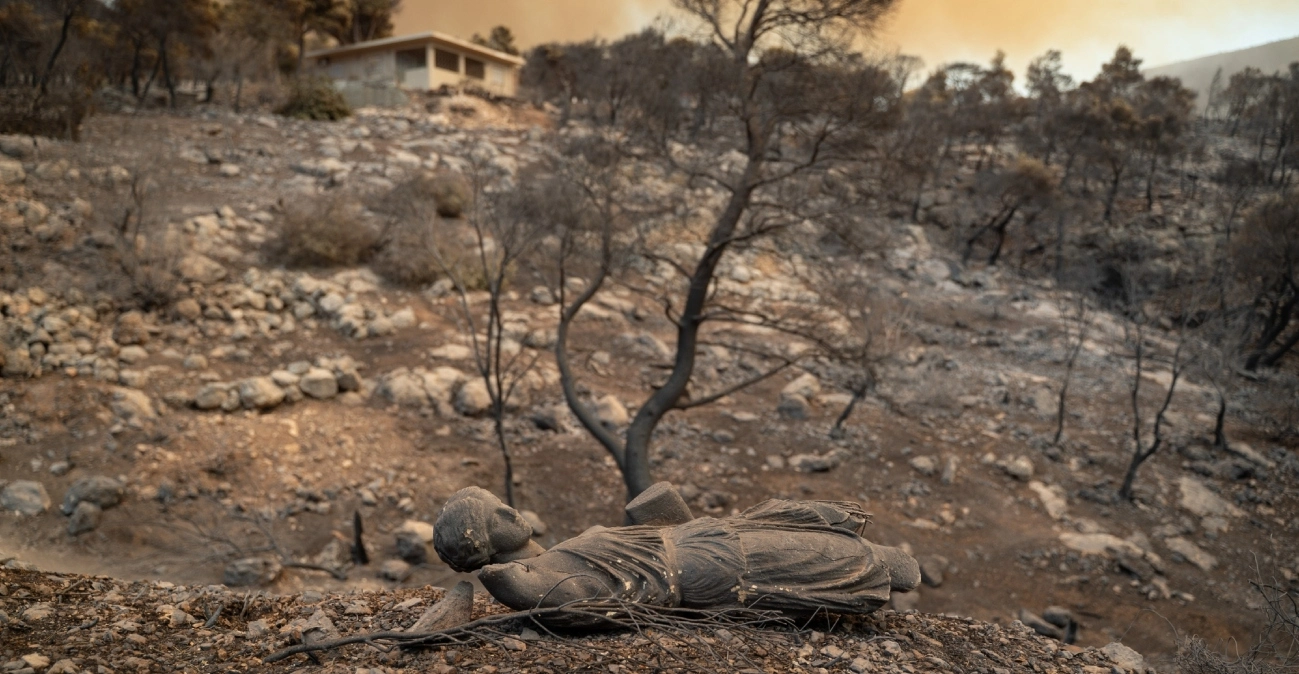
The major problem in the Attica-Boeotia fire was the strong, extreme winds that effectively grounded the aerial firefighting fleet for two days. Greece has the strongest fleet of aircraft and helicopters, owned and leased, in Europe, and it is due to be reinforced further with the phased delivery of new Canadair aircraft from 2028.
The country has more than 80 aerial assets, at a time when Germany, facing different conditions and following a different model, has just one. In an emergency, Germany turns to the EU’s civil protection mechanism, rescEU, to request aerial firefighting support.
“Greece really does have a very strong aerial fleet relative to its size and population. But that gradually created the illusion that aerial assets are the main answer. They are not,” Synolakis says, explaining: “Aircraft and helicopters are extremely useful for temporarily reducing the intensity of a fire, supporting ground forces and protecting critical points. But they cannot extinguish a fire for good without ground forces. What’s more, in strong winds, smoke or poor visibility, their effectiveness drops and crew safety comes under serious threat, as we tragically experienced in the most dramatic way on 2 August.” As he points out, “what is missing is a genuinely balanced model.