
- cross-posted to:
- typography@lemmy.ml
- cross-posted to:
- typography@lemmy.ml
You must log in or register to comment.
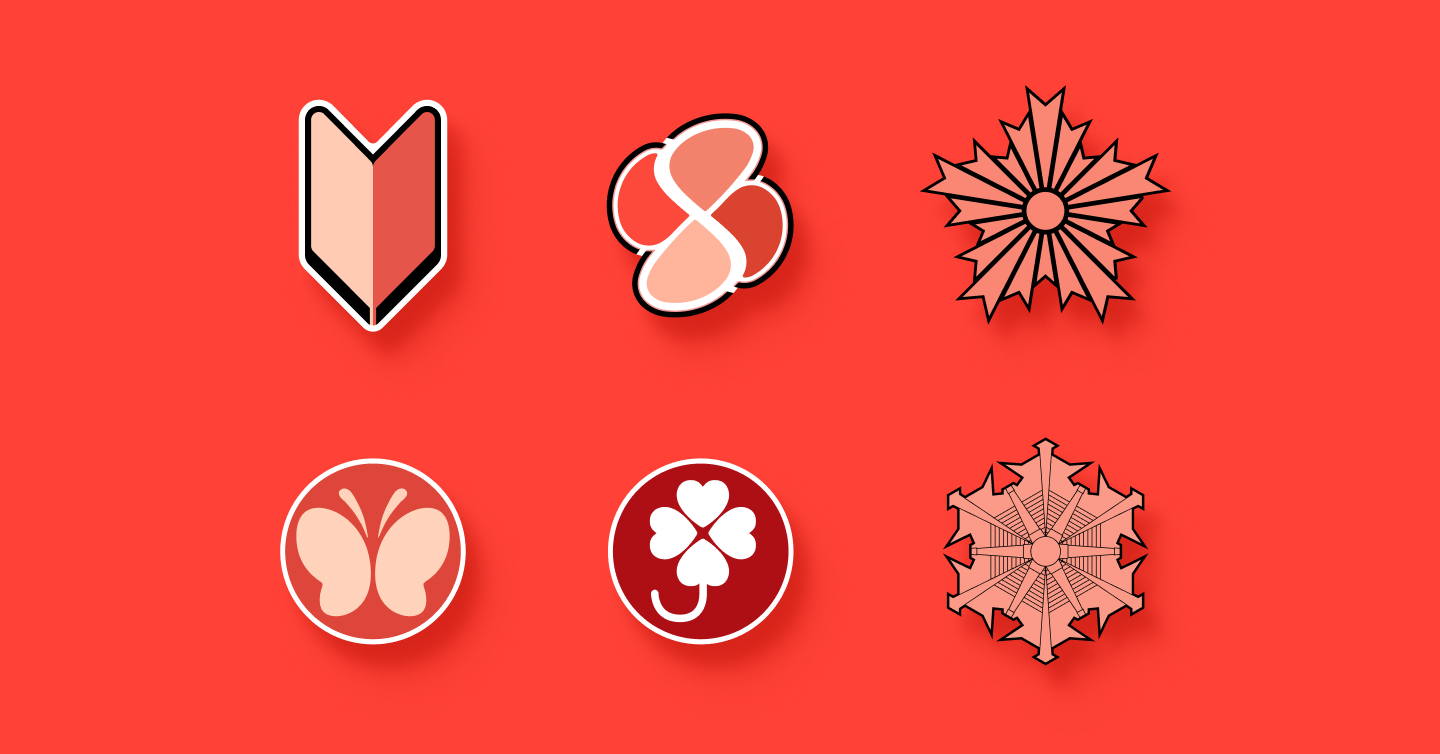
I would assume they can get away with not adding text because of limited immigration. How are people not brought up in Japan supposed to know what all these symbols mean.
Agreed, all of these needed words.
This yellow and green V-shaped symbol is pretty well known around the world as far as Japanese symbols go. It even has its own emoji (🔰) that people often use to mark a beginner.
Never heard of this, If I saw this on a car I’d assume the person works for the library.
It’s pretty much the same as the green N sign in BC, though as far as I know only NS and BC require displaying a symbol for new drivers so we’re relatively unique amongst Canadian provinces.
I like how you refer to BC and NS in the context of confusion communication, as if that is universally known.
Hehe I’m addressing BCSven, who should know the context
And I missed I was in Lemmy.ca :)
It’s the wakaba mark. Wakaba means sprout, which is also used as a colloquialism for newbie. 🌱
It’s why new accounts in Final Fantasy XIV have sprouts next to their names.
I don’t think it’s fair to say that any symbols are self explanatory but these stand out and aren’t hard to recognise.
I’m from Europe, and I feel like our road signs are pretty intuitive, but they’re not, nothing is intuitive really. Things only feel intuitive because it aligns with your expectations.
As an example, to me a pedestrian crossing is a blue sign with a person walking over a striped road.

This to me is intuitive. It has the lined crossing indicating a crosswalk. It has a person walking over it. It’s blue, so it’s an informational marker.
When I visited the U.S. some years back, a particular sign kept cropping up everywhere, and I didn’t understand what it meant. It was yellow and said Ped Xing. After a few days I asked my friend who Ped Xing was, and why their name was signed everywhere. Why hadn’t I headed of them, if they seemingly did something to warrant their name being put all over the place? They had no idea what I was talking about until I pointed one out.
Mr/Ms Xing is actually Pedestrian Crossing. It sounds like a Chinese name to me, but somehow X is read as cross.

Our signs generally don’t have much text, and this just didn’t register as that for me. It didn’t help that many crossings weren’t striped, and not all crossings had Ped Xing watching over them. There was no pattern to infer meaning from.
The euro pedestrian crossing makes sense to anyone that has seen a crossing in their life. The USA one only works for English speakers I guess, and as you noted what is Xing?
Not sure if you actually wondered what Xing means, but in case you did I think is X-ing as in cross-ing. Similar to Xmas, is Christmas which I think Americans relate to the cross (even though the name of Jesus does not relate to the cross).
I’a very much not universally understandable m, whereas the European is at least decipherable.
