Tespia
  • Communities
  • Create Post
  • heart
    Support Lemmy
  • search
    Search
  • Login
  • Sign Up
fossilesque@mander.xyz to Space Weather@mander.xyzEnglish · 5 months ago

NJIT Physicists Trace Sun’s Magnetic Engine, 200,000 Kilometers Below Surface | NJIT News

news.njit.edu

external-link
message-square
0
link
fedilink
  • cross-posted to:
  • physics@mander.xyz
1
external-link

NJIT Physicists Trace Sun’s Magnetic Engine, 200,000 Kilometers Below Surface | NJIT News

news.njit.edu

fossilesque@mander.xyz to Space Weather@mander.xyzEnglish · 5 months ago
message-square
0
link
fedilink
  • cross-posted to:
  • physics@mander.xyz
NJIT Physicists Trace Sun’s Magnetic Engine, 200,000 Kilometers Below Surface
news.njit.edu
external-link
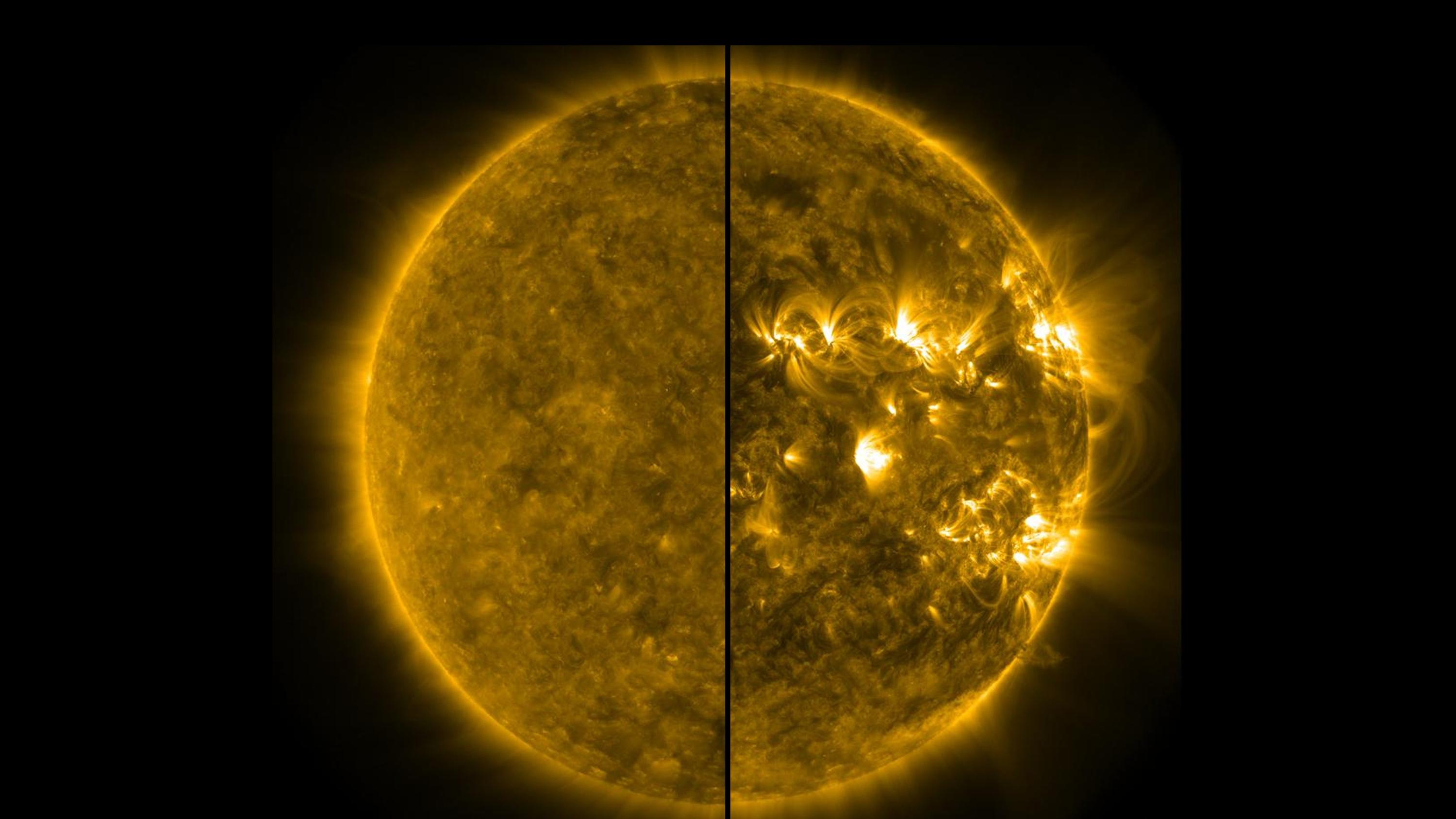
In an analysis of nearly three decades of solar acoustic data, NJIT physicists report evidence that the solar dynamo — the magnetic engine powering the Sun’s 11-year cycles and eruptive events — operates nearly 200,000 kilometers beneath the Sun’s surface.Every eleven years, the Sun’s magnetic field flips. Sunspots — dark, cooler regions on the Sun’s surface that mark intense magnetic activity and often trigger solar eruptions —appear at mid-latitudes and migrate toward the star’s equator in a butterfly-shape pattern before fading as the cycle resets.

alert-triangle
You must log in or register to comment.

Space Weather@mander.xyz

spaceweather@mander.xyz

Subscribe from Remote Instance

Create a post
You are not logged in. However you can subscribe from another Fediverse account, for example Lemmy or Mastodon. To do this, paste the following into the search field of your instance: !spaceweather@mander.xyz

Welcome to Space Weather

Space weather is a branch of space physics and aeronomy, or heliophysics, concerned with the varying conditions within the Solar System and its heliosphere. This includes the effects of the solar wind, especially on the Earth’s magnetosphere, ionosphere, thermosphere, and exosphere. Though physically distinct, space weather is analogous to the terrestrial weather of Earth’s atmosphere (troposphere and stratosphere). The term “space weather” was first used in the 1950s and popularized in the 1990s. Later, it prompted research into “space climate”, the large-scale and long-term patterns of space weather.

  • Wikipedia


Rules

  1. Don’t throw mud. Be kind and remember the human.
  2. Keep it rooted (on topic).
  3. No spam.

Resources

  • SpaceWeatherLive
  • NOAA Aurora Dashboard
  • AuroraWatch UK
Visibility: Public
globe

This community can be federated to other instances and be posted/commented in by their users.

  • 1 user / day
  • 1 user / week
  • 1 user / month
  • 2 users / 6 months
  • 0 local subscribers
  • 137 subscribers
  • 31 Posts
  • 0 Comments
  • Modlog
  • mods:
  • fossilesque@lemmy.dbzer0.com
  • BE: 0.19.11
  • Modlog
  • Instances
  • Docs
  • Code
  • join-lemmy.org