

cross-posted from: https://hexbear.net/post/7455392
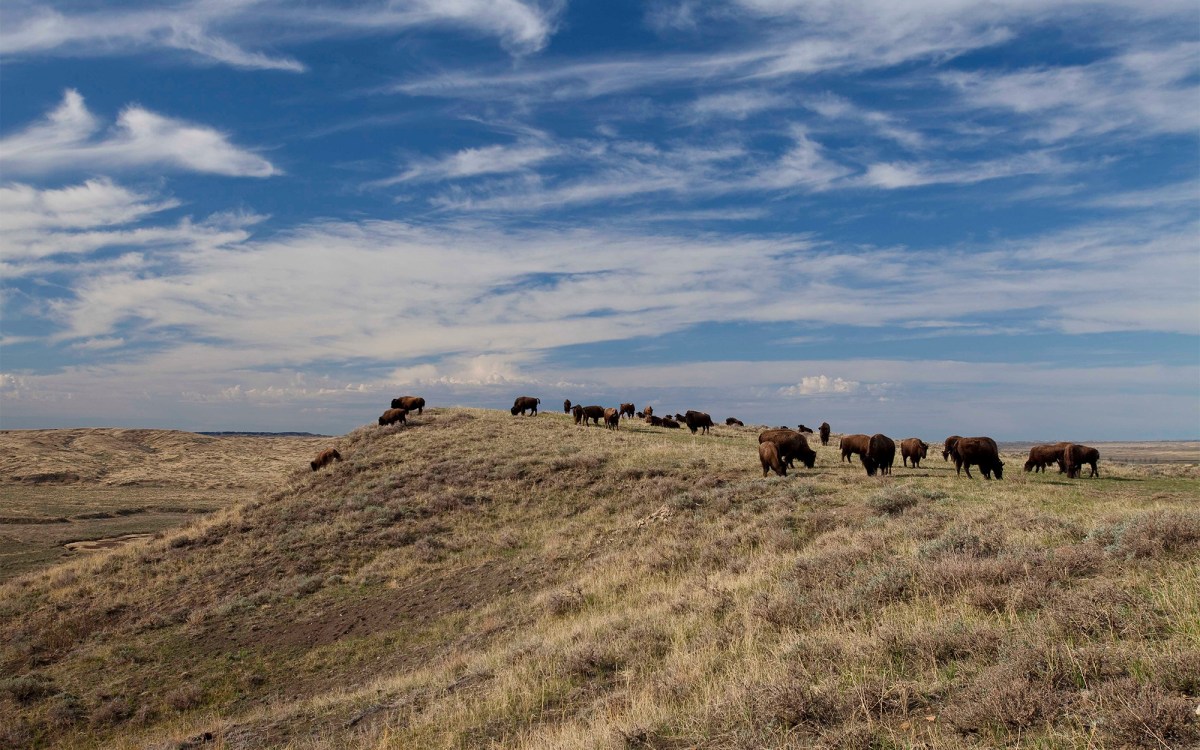
The U.S. Department of the Interior has said it will revoke the grazing permits that have allowed American Prairie to run bison on roughly 63,000 acres of federal public land in Montana. This decision would affect seven parcels managed by the Bureau of Land Management in Phillips County, and it would hinder the organization’s larger goals of conserving large swaths of intact grasslands while restoring the native grazers to those landscapes.
The Interior’s rationale for yanking the permits, according to its Jan. 16 proposed decision, is that under the Taylor Grazing Act, the BLM can only issue grazing permits for livestock managed for “production-oriented” purposes. It claims that American Prairie’s emphasis on conservation runs counter to those purposes.
American Prairie CEO Alison Fox criticized this reasoning as both unfair and inconsistent with long-standing public-lands grazing practices in Montana. She said in a response to the decision that it creates uncertainty, not just for American Prairie — which has been grazing bison using federal leases since 2005 — but for all other livestock owners in the West. She added that American Prairie plans to protest the decision and will take further legal action, if necessary.
“This is a slippery slope,” Fox said in a statement shared with Outdoor Life. “When federal agencies begin changing how the rules are applied after the process is complete, it undermines confidence in the system for everyone who relies on public lands. Montana livestock owners deserve clarity, fairness, and decisions they can count on.”
The grazing permits now in limbo were approved by the BLM in 2022 after years of analysis and public comment. The agency noted in its record of decision that the feeding habits of bison could lead to habitat improvements there, and that it had granted similar bison grazing permits on BLM lands in Colorado, North Dakota, Wyoming, and other Western states.
This approval, however, drew intense pushback from industry livestock groups and politicians in Montana, who considered it a radical proposal and an attack on the state’s ranchers. Those same groups challenged the BLM’s approval in court, and they are now celebrating the Interior’s more recent decision — one that was signaled in December, when Interior secretary Doug Burgum used his authority to assume jurisdiction over the long-running legal battle.
There’s actually a ton of conflict regarding livestock grazing on public lands in Montana. I didn’t know the bison were considered livestock, but I have seen first hand the kind of damage cattle have been doing to local ecosystems especially because the herds always seem larger year by year.
While that is true, this is a different issue. American Prairie’s mission is connect a bunch of land in central Montana and use it to restore short grass prairie ecosystems. Part of that goal is restoring native large grazers (bison) that were largely killed off in the 1800s. Bison were historically very abundant, and had a huge effect on shaping and maintaining prairie ecosystems. Today, technically, the bison are considered “livestock” with regard to BLM grazing, but American Prairie is trying to manage the bison as wild herds and restore their ecosystem function. And lobbying for updated classification for the bison, which are neither livestock but not truly “wildlife” yet.
The pushback to American Prairie’s mission is pretty political in MT, as you might imagine…
I don’t think what I said contradicts what you said. I live in north central Montana. I just didn’t know the bison were classified as livestock, that’s all :)
What I’ve seen is ranchers pushing for more time and more herd allowance on public lands while western ecologists and native ecologists fight to restore the balance. It’s not just cows that people are fighting over. The ranchers hands also been pushing for beaver culls because they can cause hazards for the cattle. But culling the beavers and increasing the herd sizes has had cascading effects on ecosystems, especially regarding excess nitrogen in our waterways. MSU-N did a multi-year study on Beaver Creek and held a lecture on the results, and they invited the local park council to sit in (hoping they’d learn something). It visibly upset the ranchers, one even tried to argue with the professor that presented the data. To them it’s all an assault on their livelihood.
I’m not even going to go into the effects their grass mixes have been having. It’s all a hot fucking mess, and I think what American Prairie is doing is admirable
Gotcha…misinterpreted your first comment! And hi, fellow Montanan!
Also famously the Bundy Standoff in Nevada over grazing rights. https://en.wikipedia.org/wiki/Bundy_standoff

